


Chinese Textbook Vocabulary Lists, Lesson by Lesson
By the Laoshi team. Laoshi is our app; the lists described here are in its public textbook library.
Last updated: November 2026.
Most Chinese courses are built around a textbook, and the textbook decides which words you meet this week. An HSK list or a general frequency deck does not line up with that: half of it is words your class has not reached, and some of this week's words are not on it at all. What you need is the vocabulary of the lesson you are on, and nothing else.
That is the gap this page covers. Below are the textbook series we have split into lesson-by-lesson word lists, what each one contains, and how to use them.
What is in the library
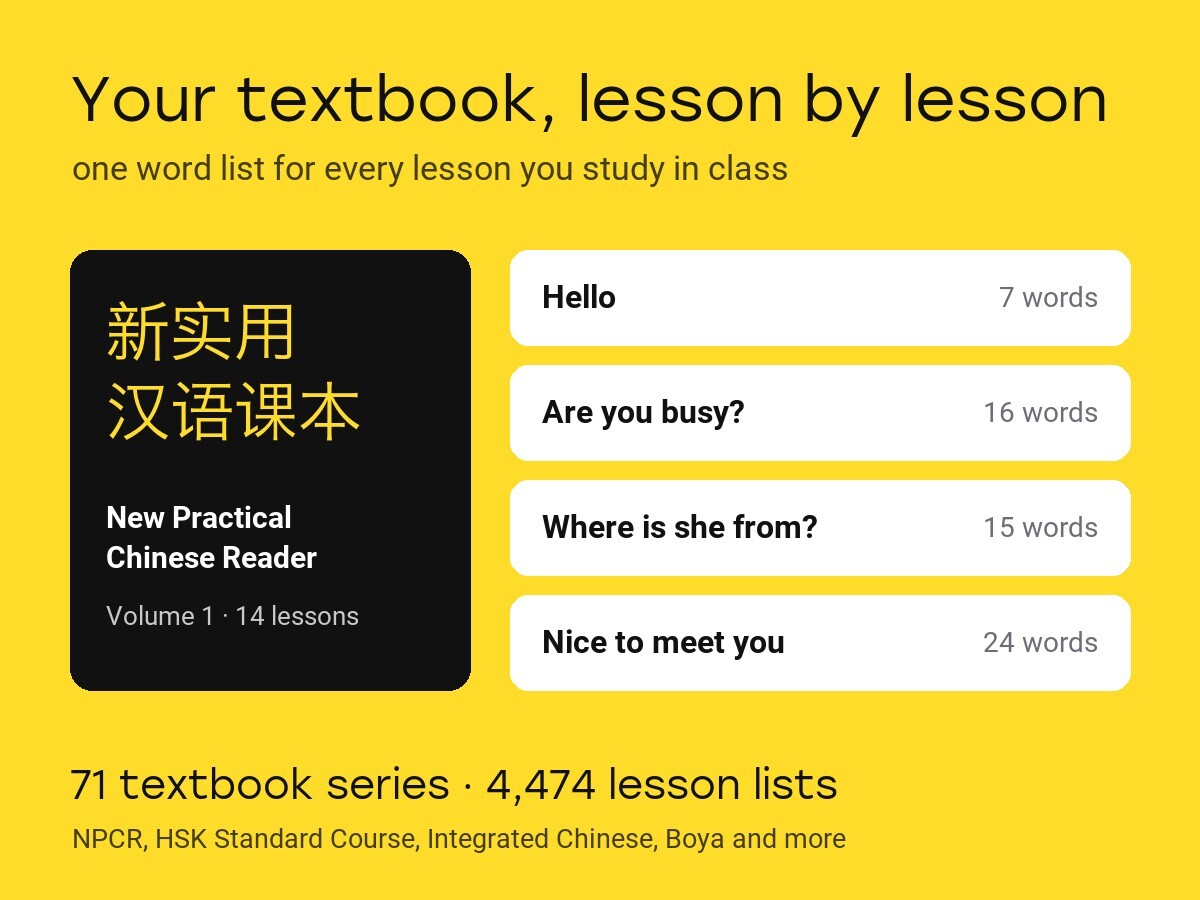
As of November 2026 the library holds 71 textbook series: 49 multi-volume series with 257 books between them, plus 22 single-level courses. Together that is 4,474 word lists, one per lesson or unit. Every series has its own page with the lessons listed and the number of words in each.
The largest series by number of books:
| Series | Books | Lists |
|---|---|---|
| Developing Chinese (发展汉语) | 28 | 542 |
| Road to Success (成功之路) | 21 | 236 |
| Chinese Breeze (graded readers) | 19 | 156 |
| Boya Chinese (博雅汉语) | 9 | 132 |
| Standard Course HSK (HSK标准教程) | 9 | 146 |
The series people ask about most
New Practical Chinese Reader (新实用汉语课本)
All six volumes, 70 lists: 14 for volume 1, 12 each for volumes 2–4, 10 each for volumes 5 and 6. Each list is one lesson, so volume 1 runs from "Hello" through "Merry Christmas" with between 7 and 52 words per lesson. In our library the series is filed as New Practical Chinese Textbook: series page.
HSK Standard Course (HSK标准教程)
The textbook series written for the HSK 2.0 exam, all nine books from HSK 1 to HSK 6, 146 lists: 15 lessons each for HSK 1 and 2, 20 for HSK 3, 10 each for HSK 4上 and 4下, 18 each for HSK 5上 and 5下, 20 each for HSK 6上 and 6下. Series page.
If you are studying for the new HSK 3.0 exam, the course written for it is New HSK Course. We have it for HSK 1–3 and HSK 4上 and 4下 so far, 68 lists, and add the next books as they come out. For the exam vocabulary itself, the HSK 3.0 word lists by level are a separate set in the app, taken from the official syllabus — see what changed in the HSK 3.0 word lists.
Integrated Chinese (中文听说读写)
Level 1 Part 1, Level 1 Part 2 and Level 2 Part 1, 10 lessons each, 30 lists. Series page.
Boya Chinese (博雅汉语)
Nine books from Elementary to Advanced, 132 lists, including the Listening and Speaking intermediate volume. Series page.
A Course in Contemporary Chinese (当代中文课程)
All six textbooks, 73 lists. Series page.
The full list of series, including Russian-language courses and business Chinese, is on the textbook library page.
How to study a textbook lesson with these lists
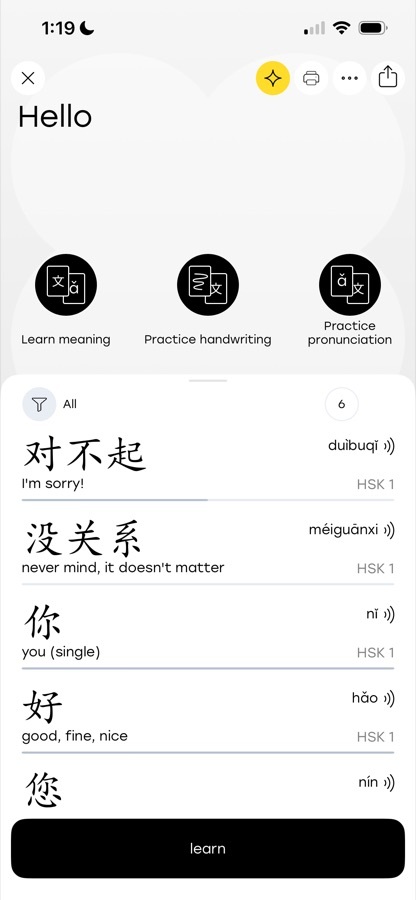
- Open the lesson you are on, not the whole book. The point of a lesson list is that it is small: 15–50 words you will see in class this week.
- Learn the list before the class, not after. Words you have already met once make the lesson text readable on first pass, and class time goes to using them.
- Keep earlier lessons in review. In the Laoshi app a finished list keeps coming back on a review schedule, so lesson 3 does not fade while you work on lesson 9.
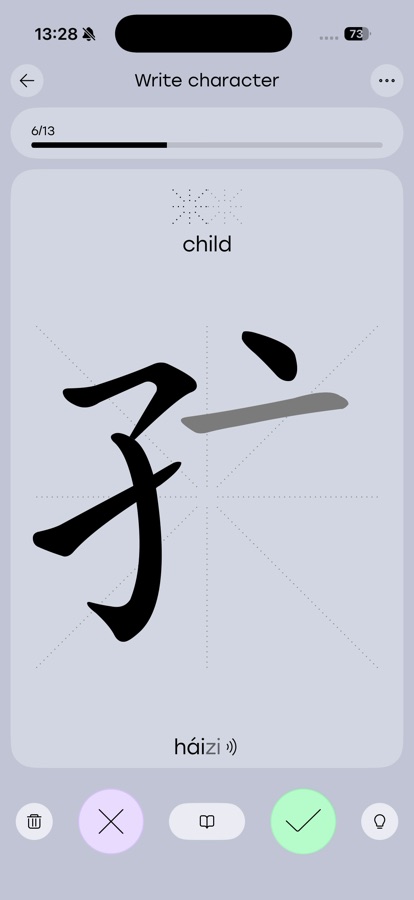
- Write the characters, not just recognise them. Each word in the app can be practised by handwriting as well as by recognition.
- Print it for class. Every textbook page offers printable worksheets for offline practice.
Quizlet sets, Anki decks or ready-made lists?
User-made Quizlet sets and Anki decks exist for many of these books. They are free and often good, but each one is a single person's typing: check that it covers the edition you have, that every lesson is there, and that the pinyin carries tone marks before you rely on it. A maintained library has the opposite trade-off — less choice of format, but one list per lesson for the whole series, kept in the same shape across books.
If you already have a list in Quizlet, Anki or Pleco, you do not have to retype it: export it as text and paste it into Laoshi Classroom, our web app, signed in with the same account. It appears as a word list in the app, and you study it like any other. If your book is not in the library at all, you can build your own list the same way.
FAQ
Is there an app to study New Practical Chinese Reader vocabulary lesson by lesson? Yes. Laoshi has all six volumes of New Practical Chinese Reader split into 70 lesson lists, filed in our library as New Practical Chinese Textbook.
Are there word lists for HSK Standard Course by lesson? Yes, all nine books from HSK 1 to HSK 6, 146 lesson lists. For the new HSK 3.0 exam, New HSK Course is available for HSK 1–4 so far.
How many textbooks does Laoshi cover? 71 series, 257 books in multi-volume series plus 22 single-level courses, 4,474 lesson lists in total, as of November 2026.
Can I see the lists without installing the app? Yes. Every series and book has a public page listing its lessons and the number of words in each. Studying the words, review and handwriting practice happen in the app (App Store, Google Play).