


Teacher in Chinese: How to Say, Write and Use 老师 (lǎoshī)
By the Laoshi team. Laoshi is a Chinese-learning app, and it is ours.
Last updated: November 2026. Dictionary entries checked on 12 November 2026.
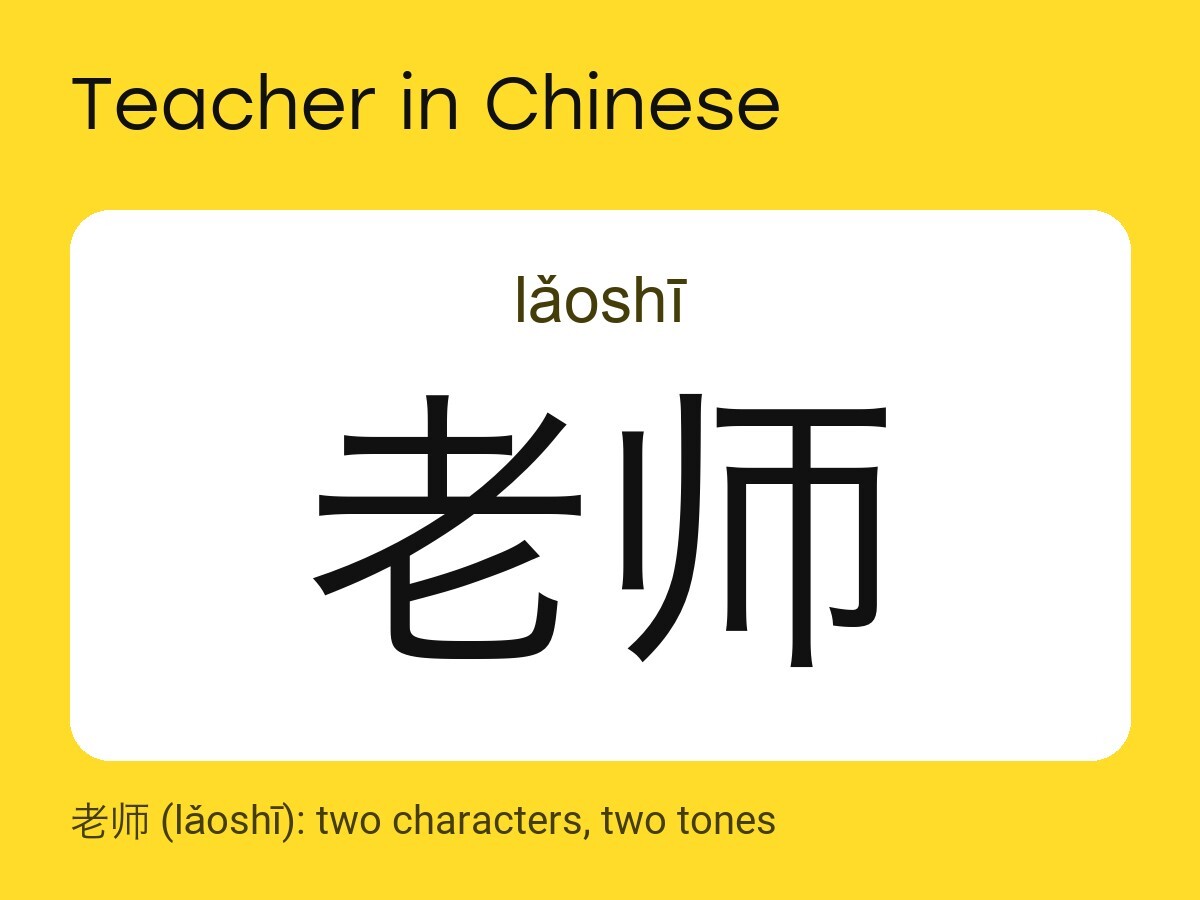
Short answer: "teacher" in Chinese is 老师, written lǎoshī in pinyin and said "laow-shrr": a low third tone, then a high, level first tone. In traditional characters it is 老師. It is the everyday word for a teacher and also what students call one, usually after the surname: 王老师 (Wáng lǎoshī, "Teacher Wang"). For "teacher" as a job title, Chinese often uses the more formal 教师 (jiàoshī). The word is the same in Mandarin and Cantonese; only the pronunciation differs.
老师 at a glance
| Feature | Details |
|---|---|
| Simplified | 老师 |
| Traditional | 老師 |
| Pinyin | lǎoshī (third tone + first tone) |
| Zhuyin | ㄌㄠˇ ㄕ |
| Cantonese (Jyutping) | lou5 si1 |
| Meaning | teacher; also a term of address for a teacher |
| Measure words | 个 (gè), 位 (wèi, polite), 名 (míng) |
| Strokes | 老 6 + 师 6 = 12 (traditional 老師: 6 + 10 = 16) |
| HSK level | HSK 1 and New HSK 1 (HSK 3.0), as tagged on our dictionary page for 老师; it is on our HSK 1 and New HSK 1 word lists |
Sources: meaning, pinyin, stroke order and HSK level from our dictionary pages for 老师, 老 and 师. The traditional form, Zhuyin, the Cantonese reading and the measure words are not in our dictionary; they come from the outside dictionary named at the end of the article.
How to pronounce lǎoshī
lǎo has the third tone, marked with ˇ. shī has the first tone, marked with ¯: high and flat.
Does the third tone change here? Not into a second tone. That change, called third-tone sandhi, only happens when a third tone comes right before another third tone. Before a first tone, as in 老师, the third tone is usually said as a "half third tone": low, without the rise at the end. In phonetic transcription, the tone of 老 in 老师 is written as 214 changing to 21. So say lǎo low and short, then jump up to a high, steady shī.
The sh in shī is said with the tongue curled back, close to English "sh", and the vowel after it is a buzzy "rr" sound, not "ee". Lǎoshī never sounds like "lao-shee".
The two characters: 老 and 师
老 (lǎo): old, experienced, respected
老 has 6 strokes and is a radical in its own right (Kangxi radical 125). Our dictionary page for 老 gives its meanings as old, experienced and respected, and notes that it also shows affection or familiarity. Its examples include 老朋友 (lǎo péngyou, an old friend) and 老作家 (lǎo zuòjiā, an experienced writer). That is the sense in 老师: the word does not say the teacher is old, and a 25-year-old teacher is just as much a 老师.
师 (shī): teacher, master, expert
师 has 6 strokes and sits under the radical 巾 (cloth); its traditional form 師 has 10 strokes. Our dictionary page for 师 gives "teacher, master", with examples such as 工程师 (gōngchéngshī, engineer) and 治疗师 (zhìliáo shī, therapist). It has an old military meaning too: a division of troops. You will meet 师 in many words for skilled people and teachers, several of which are below. A line from the Analects of Confucius uses it: 三人行,必有我师焉 (sān rén xíng, bì yǒu wǒ shī yān): when three people walk together, one of them can be my teacher.
How to write teacher in Chinese
Write 老 first, then 师: six strokes each, twelve in all. Each frame below adds one stroke, shown in red. In traditional characters (老師), used in Taiwan and Hong Kong, the word has sixteen strokes.
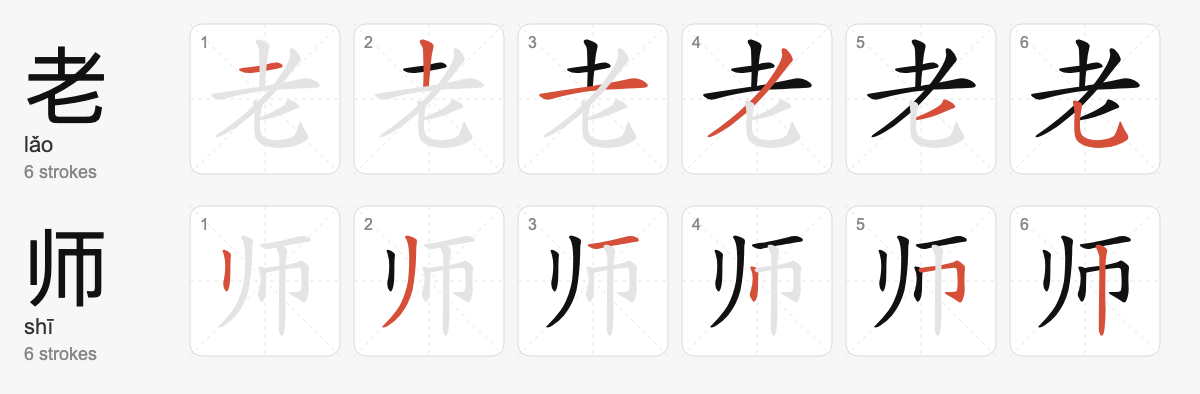
To watch the strokes animated, open our dictionary pages for 老, 师 and the whole word 老师 and press Animate.
To type it, switch to any pinyin keyboard, type laoshi without tones and pick 老师 from the suggestions.
How students address a teacher
In class you call your teacher surname + 老师: 王老师 (Wáng lǎoshī), 陈老师 (Chén lǎoshī). The title goes after the name, the same way 先生 does in 王先生, "Mr Wang". On its own, 老师 works like "Teacher!" or "Excuse me, teacher": 老师,我有一个问题 (Lǎoshī, wǒ yǒu yí ge wèntí), "Teacher, I have a question."
Dictionaries record 老师 both as a noun, "teacher", and as "a term of address for a teacher", and also note a wider polite use as a term of address for an adult, particularly a writer or an artist. To be polite when talking about a teacher, use the measure word 位: 一位老师 (yí wèi lǎoshī), "a teacher".
老师, 教师 and other words for teacher
Chinese has several words that English translates as "teacher", "master" or "tutor". They are not interchangeable.
| Word | Pinyin | Meaning | When it is used |
|---|---|---|---|
| 老师 | lǎoshī | teacher | The everyday word, and what you call your teacher |
| 教师 | jiàoshī | teacher, instructor | Teaching as a profession: job titles, forms, news |
| 先生 | xiānsheng | Mr, sir; husband | Today mostly "Mr"; an old honorific for a learned person, and still a word for "teacher" in Cantonese, Hakka and Min |
| 师傅 | shīfu | master, skilled worker | A polite way to address a skilled worker or craftsman, such as a carpenter or plumber |
| 导师 | dǎoshī | tutor, supervisor, mentor | An academic advisor or thesis supervisor; also a mentor |
| 教授 | jiàoshòu | professor | The university rank |
| 班主任 | bānzhǔrèn | homeroom teacher, class teacher | The teacher in charge of a class at school, in mainland China and Hong Kong |
老师 or 教师? A common usage note puts it simply: 教师 is usually used when referring to the profession, while 老师 is usually used as an honorific. You say 我妈妈是一名中学教师 to state your mother's job, while her students call her 老师. In everyday speech, 老师 covers both.
师傅 and 师父. 师傅 is how you politely address someone with a trade skill, and more widely, any adult you want to address politely. Its Taiwan reading is shīfù. The near-homophone 师父 is usually used for martial arts teachers and Buddhist monks or nuns.
导师 is the person who guides your research or your path: a thesis supervisor, an academic advisor, a mentor. 教授 is the academic rank of professor. 班主任 is the teacher in charge of one class, closest to a homeroom or form teacher; the term was calqued from Russian.
Teachers' Day in China
Teachers' Day, 教师节 (Jiàoshī Jié), falls on 10 September in mainland China. In Taiwan it is on 28 September, Confucius' birthday. Note that the holiday's name uses the formal 教师.
Two phrases for the day:
- 教师节快乐! Jiàoshī Jié kuàilè! Happy Teachers' Day! 快乐 means joyful, happy, as in 生日快乐, "happy birthday".
- 老师辛苦了! Lǎoshī xīnkǔ le! Thank you for all your hard work, teacher! 辛苦 means to work hard, and "你辛苦了" is a common way to thank someone for their effort.
Example sentences
- 老师好! Lǎoshī hǎo! Hello, teacher!
- 王老师好! Wáng lǎoshī hǎo! Hello, Teacher Wang!
- 她是我的中文老师。 Tā shì wǒ de Zhōngwén lǎoshī. She is my Chinese teacher.
- 老师,我有一个问题。 Lǎoshī, wǒ yǒu yí ge wèntí. Teacher, I have a question.
- 我想当老师。 Wǒ xiǎng dāng lǎoshī. I want to be a teacher.
- 我妈妈是一名中学教师。 Wǒ māma shì yì míng zhōngxué jiàoshī. My mother is a middle-school teacher.
- 李师傅明天来修空调。 Lǐ shīfu míngtiān lái xiū kōngtiáo. Master Li is coming tomorrow to fix the air conditioner.
- 我的导师是一位教授。 Wǒ de dǎoshī shì yí wèi jiàoshòu. My supervisor is a professor.
Where Laoshi fits
Our app's name is this word: Laoshi is 老师 written in pinyin without the tone marks. We make it, so take this section as what it is.
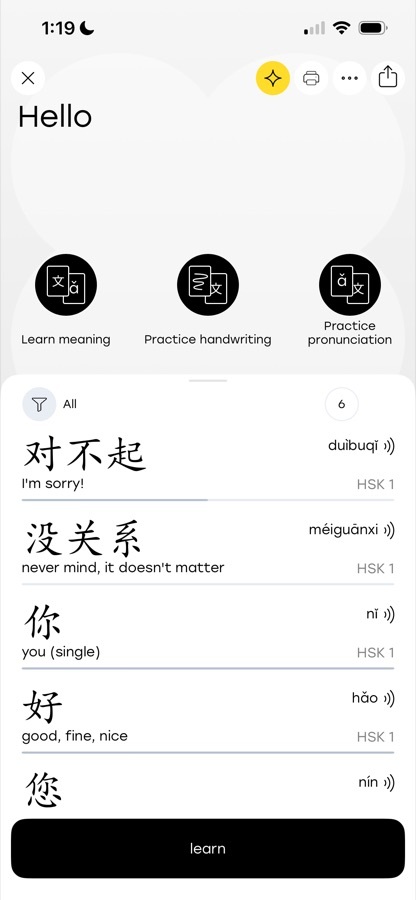
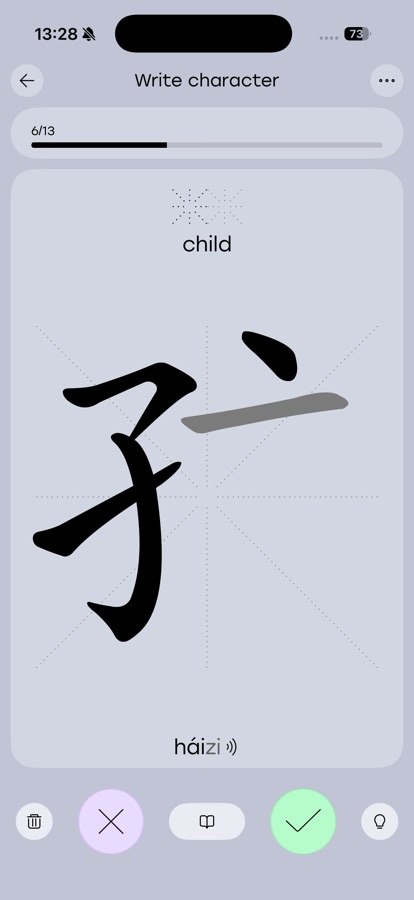
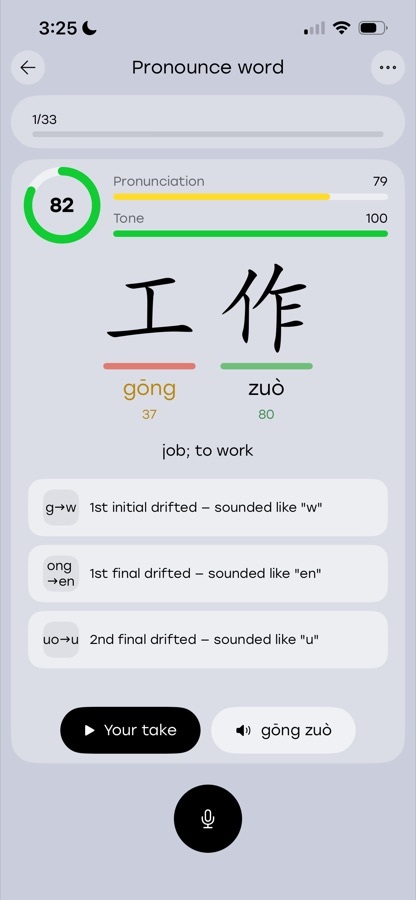
Laoshi is an app for learning Chinese words and characters: HSK lists, word lists for 71 textbook series split lesson by lesson, spaced-repetition review, character writing practice with stroke hints, and a pronunciation check that scores sounds and tones separately. 老师 is in our HSK 1 list. Every word in this article also has a free page in our online dictionary with its stroke order and example phrases, linked in the table above, and the HSK words are grouped by level in our HSK vocabulary lists; you don't need the app to use them.
Frequently Asked Questions
How do you say "teacher" in Chinese?
老师, pronounced lǎoshī: a low third tone on lǎo, then a high, level first tone on shī. It is the standard word in Mandarin. In Cantonese the same characters are read lou5 si1.
How do you write teacher in Chinese characters?
In simplified characters, 老师: 老 (6 strokes) followed by 师 (6 strokes). In traditional characters, 老師, where 師 has 10 strokes. On a pinyin keyboard, type laoshi and choose 老师.
What is the difference between 老师 and 教师?
Both mean teacher. 教师 (jiàoshī) usually refers to teaching as a profession, on forms, in job titles and in the name of Teachers' Day, 教师节. 老师 (lǎoshī) is the everyday word and the one you use to address a teacher.
How do you address a teacher in Chinese?
Use the surname followed by 老师, for example 王老师 (Wáng lǎoshī), "Teacher Wang". On its own, 老师 is a polite way to get your teacher's attention, like "Teacher!" in English.
Is 老师 an HSK 1 word?
Yes. Our dictionary page tags 老师 as HSK 1 and New HSK 1, so it is a level-1 word in both the old HSK and HSK 3.0. You can see it on our New HSK 1 word list.
Meanings, pinyin, stroke order, HSK levels and example phrases come from our dictionary pages, linked in the text. Facts our dictionary does not carry (traditional forms and their stroke counts, Zhuyin, the Cantonese reading, measure words, radicals, the tone change in 老师, the usage notes on 教师, 师傅, 导师 and 班主任, and the dates of Teachers' Day) come from Wiktionary, read on 11 November 2026.
Laoshi, an app for learning Chinese: App Store and Google Play.